
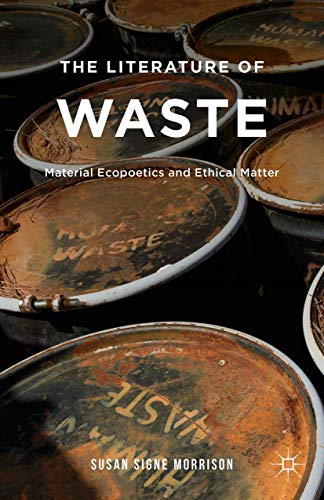
The literature of waste : Material ecopoetics and ethical matter / by Susan Signe Morrison
Material type: TextLanguage: English Publication details: New York : Palgrave Macmillan , 2015Description: xiii, 330 p. Hard BackISBN:
 - 9781137405661
- 809.933 6 SUS-L
 Books
Books
| Cover image | Item type | Current library | Home library | Collection | Shelving location | Call number | Materials specified | Vol info | URL | Copy number | Status | Notes | Date due | Barcode | Item holds | Item hold queue priority | Course reserves | |
|---|---|---|---|---|---|---|---|---|---|---|---|---|---|---|---|---|---|---|
|
Books
|
ST. THOMAS COLLEGE LIBRARY, PALAI | English | English - Reference | 809.933 6 SUS-L (Browse shelf(Opens below)) | Checked out to Keerthy Elza Tes Mathew (R251026) Reference Book | 2026-04-14 | 93251 |
"Establishing the field of Waste Studies, a material ecocritical approach, The Literature of Waste traces literal and figurative waste in the western canon. The materiality of waste - as in landfills, trashcans, garbage dumps, compost piles - inevitably transforms into metaphor. Waste emerges out of various disciplines, such as anthropological codification, psychological repression of bodily decay, sociological civilizing process, historical garbaging of the past, economic conspicuous consumption, urban disposal of bodily waste, religious sin, and philosophical angst. Vibrant materialism disturbs the use of the metaphor of waste used to characterize people as disposable garbage. If we can read waste as possessing dynamic agency, how might that change the ethics of refuse-ing and ostracizing wasted humans? Poets, the ragpickers of litter-ature, cure homeopathically. Waste, Compost, and Gleaning Aesthetics acknowledge the poignancy of materiality by revealing the humanity we share. "--
There are no comments on this title.